
The Safety of Powered Gates
There are many things that we take for granted in the world we live in today. They are the simplest of things that make daily activities better. Whether it is our cell phones and all the attachments they include, pneumatic actuators and the ease of functioning they offer us, or the powered gate.
The powered gate allows us to free up labour costs by reducing the redundant position of guard duty. It provides a sense of security for offices, job sites, and communities. However, the convenience of an unmanned gate, and the reduction of labour costs comes the flip side, an apparatus that at best is monitored by security cameras and placard signage. This doesn’t always convey the message in the best way to prevent potential injuries and even death at the hands of these devices.
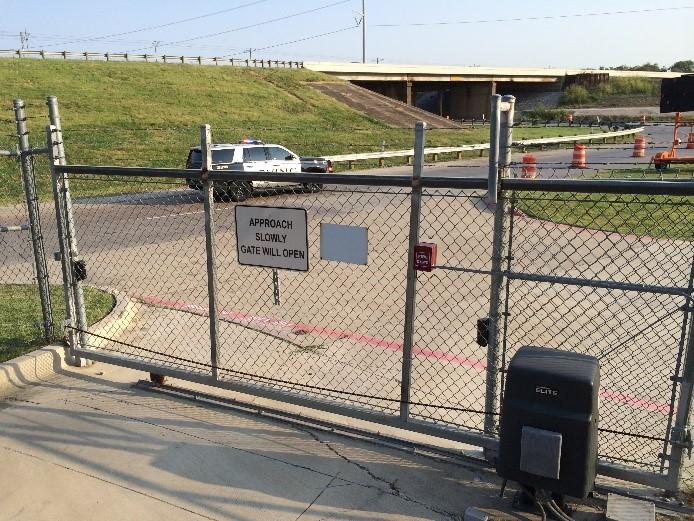
Agencies worldwide have put in place rules to follow to ensure that uneducated people who trust that we have taken every safety precaution into consideration, will not fall victim to the negative consequences these powered gates can sometimes cause, such as getting trapped, being crushed, or even death.
Organizations such as the HSE, and OSHA foresee the possibilities of what can happen, and recognize the accidents in recent years that have happened, and have required actions that responsible persons that work on, operate, or own powered gates must follow to ensure everyone’s safety going forward.
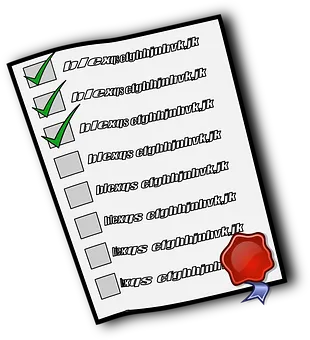
When you fall into the one of the categories that make you a responsible person, you must ensure that these devises are safe, and that they are inspected on a regular basis. Ideally you document that inspection on a daily walk sheet. Upon inspection you want to ensure that the device is effective in its functionality. The gate should be installed according to the manufacturer’s guidelines.
Once the gate is installed, and the user instructions have been transferred to the owner from the competent installer, the owner must check that the following mechanisms and features are in place and operable. Putting these together on a daily checklist is a great starting point.
Do you have a minimum of two devices or accessories that will prevent trapping an individual? A device is required to sense obstruction, and to reverse the gate when it becomes obstructed while being opened or closed. A second, back-up, device that performs the same service is also required. The goal is to create a redundancy in a second spot to ensure that all precautions are taken.
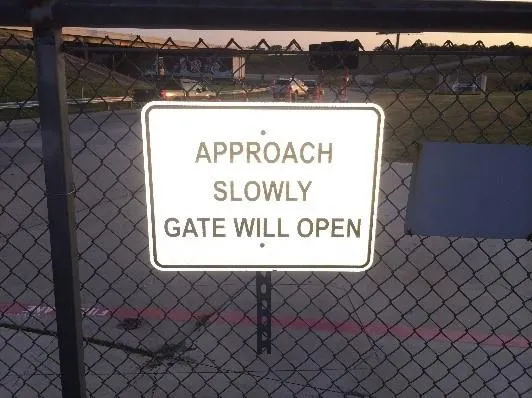
Do you have warning or advisory signs on each side of the gate to prepare the user for operation? Ideally you will have an inventory of each sign on hand to replace when they become worn out from the sun, or are broken or ripped off from inclement weather.
Ensure that the exposed edges have a safety strip on them, running the length of the gate to avoid injury from pedestrian traffic. Does your gate have a force limitation device that is capable of stopping an individual from getting trapped or injuring someone when it senses a physical blockage? Finally does the fence or stopping closed point, which is a fixed point, working in conjunction with the gate have a fixed guard that protects the gate when closed and not operating?
Finally, there are four types of people that will be interfacing with your powered gates. Firstly, the competent person that is installing and repairing the gates. This person will most likely create the least traffic through the gate. Secondly, the owner, this person may or may not use the gate every day, but is legally obligated to be the most knowledgeable in its operation. The third individual will operate the gate most often, they are the employee or resident. They will rely on its safe operation daily. They will need the owner to be proactive with preparing the gate to operate flawlessly. Lastly is the curiosity seeker. This may be an animal, or an uneducated person. They unknowingly require the safety devices and signage in place to ensure that they don’t become trapped, injured or killed.
The powered gate is a great addition to a work or residence. The costs associated with maintaining it safely on a daily basis, is always going to be less expensive and less traumatic than reacting after the fact, if an accident has occurred.
Find out how to manage your business' health and safety better
RIDDOR and COVID-19
Many employers are concerned about their reporting obligations for COVID-19/Coronavirus/SARS-CoV-2 under RIDDOR in the ongoing pandemic. You may be pleased to know that you do not have to report everything to the Health and Safety Executive (HSE). We'll provide more info about when, what, and how to report.
The most common concern we've seen recently from employers is whether they need to report all COVID-19 and coronavirus testing results to the HSE. The short answer is no. According to the HSE: “There is no requirement under RIDDOR (The Reporting of Injuries, Diseases and Dangerous Occurrences Regulations 2013) to report incidents of disease or deaths of members of the public, patients, care home residents or service users from COVID-19. The reporting requirements relating to cases of, or deaths from, COVID-19 under RIDDOR apply only to occupational exposure, that is, as a result of a person's work.”
Generally speaking, the ordinary RIDDOR rules already cover COVID-19. You should only make a report under RIDDOR when one of the following circumstances applies:
• an accident or incident at work has or could have caused the release of coronavirus (SARS-CoV-2). (Report as Dangerous occurrence)
• a worker is diagnosed with COVID-19 due to occupational exposure. (Report as Disease)
• a worker dies because of occupational coronavirus exposure. (Report as Work-related death due to exposure to a biological agent)
The bottom line is that existing rules cover most COVID-19 measures, and most of the COVID-19 guidance comes from public health authorities rather than the HSE. The environment remains chaotic, but you can minimize your legal exposure by continuing your existing compliance steps. This will include communicating with your insurer about risks, following public health guidance, and communicating regularly with your workers or unions on any of their concerns.




© Gavin Coyle, 2021