
Designing A Safe SCADA Panel Installation Approach
Wind Turbine Equipment
Coyle Group provided a Safety Officer for a customer in Northern Ireland in 2017. The project involved the construction of nine wind turbines on farmland in Northern Ireland. During the project kick-off meeting it was identified that the Farm Control Unit and SCADA system would not fit through the control room door of the substation.
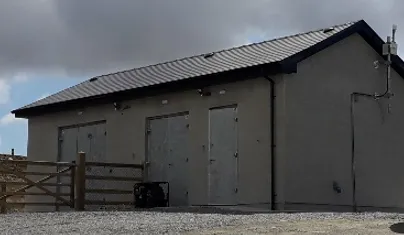
Control Building
A Bespoke Requirement
A bespoke and safe solution was required to move this delicate equipment into the building and into its final position. This would require the unit to be moved on its side to fit through the door. The unit was far too heavy to be handled manually, so a plan was devised by our Safety Officer on site to do the job safely.
Trialling The Solution
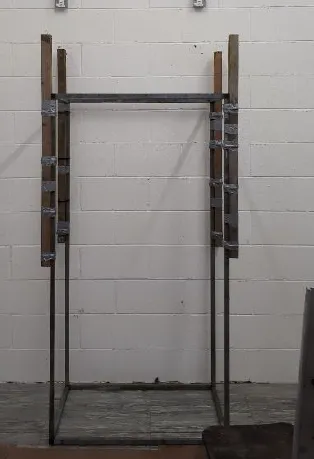
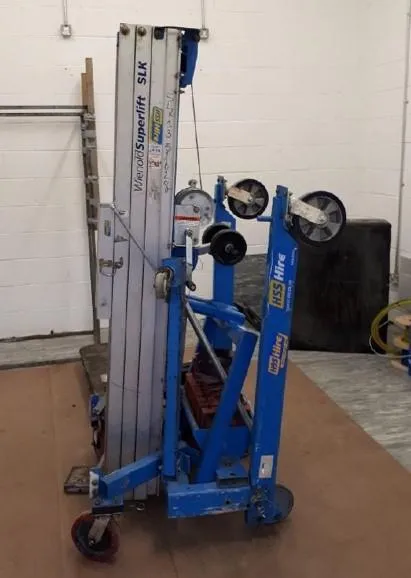
The Safety Officer contacted the relevant customer manager to understand all the information about the unit. Once this was available, a replica was developed to mirror the size of the panel. A couple of portable lifting solutions were then trialled on site with the assistance of the contracted hire company. Once the trial was dynamically risk assessed and completed, the Safety Officer put together the required paperwork for the customer to complete and sign off.
A Successful Lift
The required lift of the equipment took place as per the Risk Assessment Method Statement (RAMS) and Lift Plan. The unit was successfully moved into position for the technicians to install.
Better Substation Designs For The Future
Beyond the immediate challenge on this project, this operation identified a design issue with the substation. The site team on this project learned from the issues and that same site team was in place on the following project. Consultation between our Safety Officer and the Principal Contractor’s Project Manager ensured that, on the sister site, lessons learned were actioned. The substation door size was changed to reflect the requirements and the unit was simply wheeled into position on a pallet truck.
Improve the compliance of your business today
Discover how to incorporate safety into the design process by talking to Gavin
RIDDOR and COVID-19
Many employers are concerned about their reporting obligations for COVID-19/Coronavirus/SARS-CoV-2 under RIDDOR in the ongoing pandemic. You may be pleased to know that you do not have to report everything to the Health and Safety Executive (HSE). We'll provide more info about when, what, and how to report.
The most common concern we've seen recently from employers is whether they need to report all COVID-19 and coronavirus testing results to the HSE. The short answer is no. According to the HSE: “There is no requirement under RIDDOR (The Reporting of Injuries, Diseases and Dangerous Occurrences Regulations 2013) to report incidents of disease or deaths of members of the public, patients, care home residents or service users from COVID-19. The reporting requirements relating to cases of, or deaths from, COVID-19 under RIDDOR apply only to occupational exposure, that is, as a result of a person's work.”
Generally speaking, the ordinary RIDDOR rules already cover COVID-19. You should only make a report under RIDDOR when one of the following circumstances applies:
• an accident or incident at work has or could have caused the release of coronavirus (SARS-CoV-2). (Report as Dangerous occurrence)
• a worker is diagnosed with COVID-19 due to occupational exposure. (Report as Disease)
• a worker dies because of occupational coronavirus exposure. (Report as Work-related death due to exposure to a biological agent)
The bottom line is that existing rules cover most COVID-19 measures, and most of the COVID-19 guidance comes from public health authorities rather than the HSE. The environment remains chaotic, but you can minimize your legal exposure by continuing your existing compliance steps. This will include communicating with your insurer about risks, following public health guidance, and communicating regularly with your workers or unions on any of their concerns.




© Gavin Coyle, 2021