
Improving Telehandler Safety
Wind Farm Construction In Finland
In 2017 a Coyle Group Safety Officer was engaged on a wind energy construction project for a customer in Finland. He identified an issue in which a telehandler was being utilised outside its prescribed capacity to place and remove ballast from the main installation crane. This observation was brought to the attention of the crane company and site management.
The Wrong Tools For The Job
The telehandler was lifting a weight of 12.5te even though the capacity on the duty chart stated that the maximum working load limit (WLL) was 12te. Continuing to use this method after the problem was identified resulted in the telehandler tipping forward as the load it was carrying became dynamic. This demonstrated a lack of safety culture on site and needed urgent attention after the initial findings were not heeded.
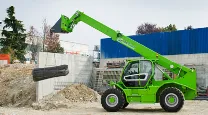
12te Telehandler
Speed Before Safety
After the incident, work was stopped by our consultant, and a time-out for safety was held. It was discovered at this point that the reason behind the incident was a desire for speed at the cost of safety. There was a crane on site that was initially expected to carry out this task, but the decision was taken to use the telehandler to speed up the operation, disregarding the manufacturer’s operating instructions.
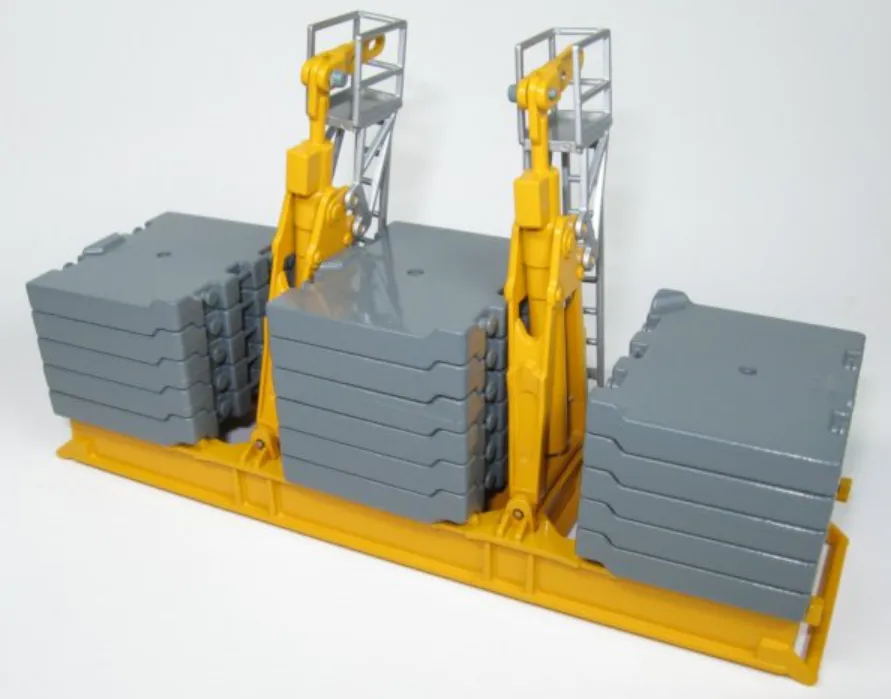
12te Ballast tray for the operating crane
Putting Safety First
After the time-out for safety was held, the original plan of using a rigging crane was re-established. The safety culture of the team was improved, and this resulted in the work being carried out safely.
The Importance Of Committing To Safety
This incident highlighted an organisational failing that sat with the site team and contracted crane company. The client issued a Safety Alert company-wide to emphasize the risk from utilising machinery in this way.
By fully buying into carrying out the job safely the project finished on time and without further incident in this field.
Improve the compliance of your business today
Talk to Gavin about getting the right health and safety talent for your team
RIDDOR and COVID-19
Many employers are concerned about their reporting obligations for COVID-19/Coronavirus/SARS-CoV-2 under RIDDOR in the ongoing pandemic. You may be pleased to know that you do not have to report everything to the Health and Safety Executive (HSE). We'll provide more info about when, what, and how to report.
The most common concern we've seen recently from employers is whether they need to report all COVID-19 and coronavirus testing results to the HSE. The short answer is no. According to the HSE: “There is no requirement under RIDDOR (The Reporting of Injuries, Diseases and Dangerous Occurrences Regulations 2013) to report incidents of disease or deaths of members of the public, patients, care home residents or service users from COVID-19. The reporting requirements relating to cases of, or deaths from, COVID-19 under RIDDOR apply only to occupational exposure, that is, as a result of a person's work.”
Generally speaking, the ordinary RIDDOR rules already cover COVID-19. You should only make a report under RIDDOR when one of the following circumstances applies:
• an accident or incident at work has or could have caused the release of coronavirus (SARS-CoV-2). (Report as Dangerous occurrence)
• a worker is diagnosed with COVID-19 due to occupational exposure. (Report as Disease)
• a worker dies because of occupational coronavirus exposure. (Report as Work-related death due to exposure to a biological agent)
The bottom line is that existing rules cover most COVID-19 measures, and most of the COVID-19 guidance comes from public health authorities rather than the HSE. The environment remains chaotic, but you can minimize your legal exposure by continuing your existing compliance steps. This will include communicating with your insurer about risks, following public health guidance, and communicating regularly with your workers or unions on any of their concerns.




© Gavin Coyle, 2021